What to wear on Jungfraujoch
You leave a valley town in a coach and step out onto snow the same day. Nobody rents clothes or shoes on the top, so whatever you need has to travel up with you. The list is short, and most of it is probably in your suitcase already.
Dress for the top, not for the hotel door
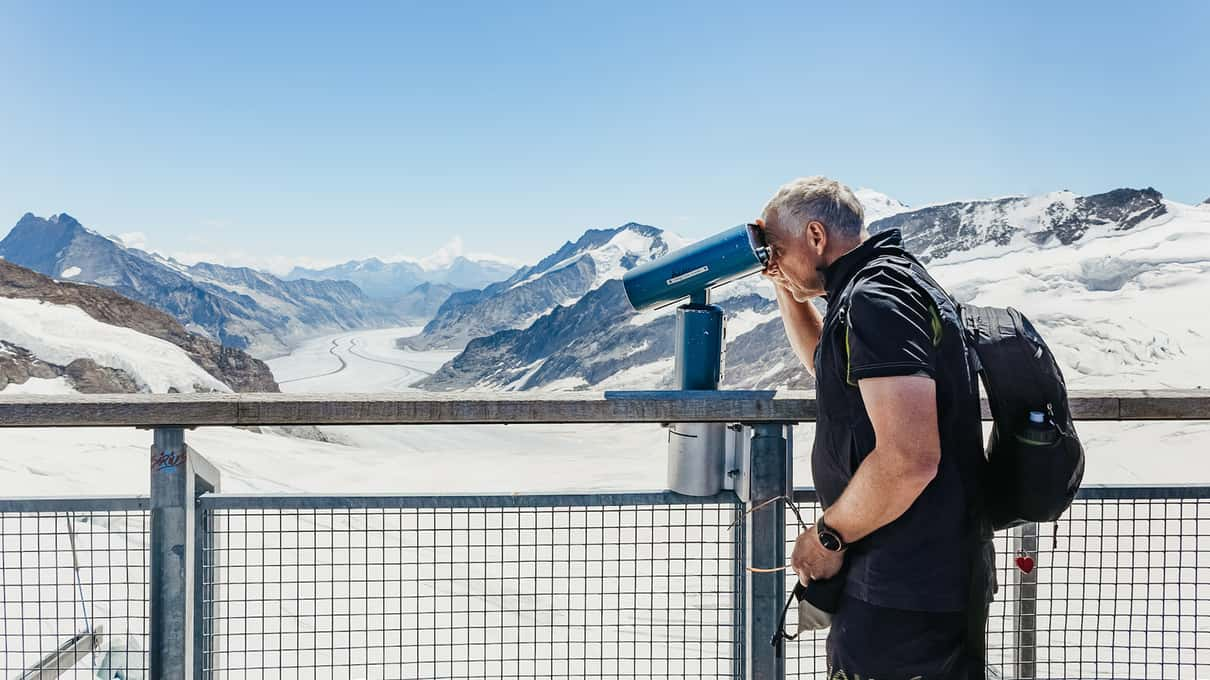
The station at the Jungfraujoch sits at 3,454 m (11,332 ft), and the Sphinx terrace is higher again. A summer morning in Interlaken tells you nothing about what you will need there.
Average daytime highs on the terrace run from −10 °C (14 °F) in midwinter to 4 °C (39 °F) in August. That means a fridge at the warmest, and wind can make it feel harsher than the thermometer says.
The good news is that you are not outside all day. On a Jungfraujoch tour from Interlaken most hours pass in a coach seat, a train or a warm room, so clothing that opens and closes in layers beats one huge coat.
Layers for each part of the year
The temperatures come from the long-term record at the height of the terrace. The right-hand column is our own suggestion, meant for a visitor who steps out for photos and a walk on the Plateau rather than for a long hike.
| Dates | Average daytime highs | What we would put on |
|---|---|---|
| December to March | −10 to −9 °C (14 to 16 °F) | Thermal base, fleece, winter jacket, warm hat, gloves, scarf |
| April and November | −7 to −6 °C (19 to 21 °F) | The winter set, perhaps with a thinner middle layer |
| May and October | −2 °C (28 °F) | Long trousers, fleece, windproof jacket, hat, gloves |
| June to September | 1 to 4 °C (34 to 39 °F) | T-shirt for the valley, sweater, jacket, light gloves in the pocket |
Our guide to the seasons splits these figures up by single months and adds how often the sun shows. Shorts in July are fine for the village, but pack trousers to change into.
Start with the shoes
If you get one item right, make it the soles. The tour company behind our pick asks guests to come in footwear with rubber soles, and it warns that there is nothing to borrow on arrival.
You will be walking on snow at the Plateau and on ground inside a glacier at the Ice Palace. Hiking shoes or sturdy sneakers with tread do the job in summer, while winter visitors will want something lined and water-resistant.
Leave sandals and smooth leather in Interlaken. Wet feet at freezing temperatures shorten a visit faster than anything else, so a spare pair of socks is cheap insurance.
Sunglasses in every month
Snow throws light back at you from below, and at this height the glare is strong even through thin cloud. Sunglasses are on the list our pick sends to its guests, and we would add sunscreen and a lip balm.
Winter visitors forget this most readily, since nobody thinks of sunburn at −10 °C (14 °F). A cap with a brim helps children who refuse glasses, and tinted ski goggles are a sensible substitute on a windy terrace.
What goes in the bag
Keep it to a small backpack you can wear, as your hands are better free on snow. Everything else can stay in the hotel, since the day ends where it began.
- Passport or ID, which our pick asks every guest to carry
- A bottle of water to sip while you walk slowly
- Sunglasses and sunscreen
- Hat and gloves, even for an August date
- A snack, as lunch is not in the fare, though eating in the coach is not allowed
- Your own rail ticket or pass if you booked the guide-only tour from Grindelwald
You can eat in a restaurant up there, and a Lindt shop takes care of the sweet course. Our guide to the top shows how the sights fit into a visit of two hours, which makes a long lunch a costly choice.
The day this list was made for
Best of Switzerland Tours takes up to 48 people by coach and Eiger Express to the cogwheel train, with at least 2 hours on top. The tour is not suited to wheelchair users or children under 2.
Indoors, outdoors and back again
A visit switches constantly between warm rooms and open snow. The lift to the Sphinx and the Alpine Sensation walk are under a roof, whereas the terrace and the Plateau put you straight into the weather.
The Ice Palace sits somewhere in between. It shelters you from wind, yet you are walking through tunnels carved into a glacier, so keep the jacket closed and your hands out of your pockets in case you slip.
On the way down our pick changes sides of the mountain and rolls through Wengen to Lauterbrunnen. You will be peeling layers off in the train, so wear a top you are happy to sit in, and see the stop-by-stop day for the order.
Clothes cannot fix thin air
Whatever you wear, the altitude stays. Walk slowly and drink water, as some visitors get a headache. Jackets that zip open are useful here, because hurrying uphill in a sealed coat is the last thing you want.
The railway advises against the journey for children under 2, and several tours rule out guests with heart problems or altitude sickness. Anyone unsure should ask a doctor first, then check the not-suited lines in our Jungfraujoch tour comparison.
If the weather turns
Storms may close the open-air areas, and then a heavy parka spends the afternoon on your arm. It still belongs in the bag, since the terrace can reopen and the Ice Palace is cold in any case.
Better to look at the railway's webcams before you dress. The guide to cloudy days tells you what to look for, and whether a guided Jungfraujoch day trip should wait for another morning.